Showing posts with label Chicago gangsters. Show all posts

Wednesday, October 9, 2013

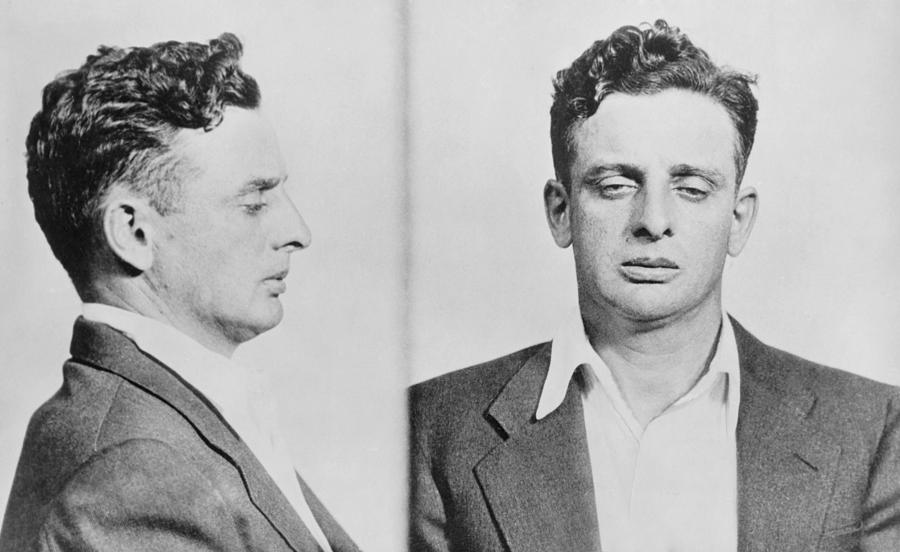
Chicago area bootlegger Roger Touhy escapes from prison - 1942


On October 9, 1942, notorious Chicago area bootlegger Roger "The Terrible" Touhy escapes from Statesville Prison by climbing the guard's tower. Touhy, who had been framed for kidnapping by his bootlegging rivals, was serving a 99-year sentence for a crime he did not commit. The son of a police officer, Touhy had served in the Navy during World War I and later set up a trucking business in the Chicago suburbs. When business slowed during Prohibition, Touhy realized he could earn a better living through bootlegging. Along with his partner, Matt Kolb, Touhy began brewing his own beer and shipping it to speakeasies all over the state. His beer was widely considered the finest available at the time. When mob boss Al Capone heard about Touhy's operation, he wanted to get in on the action, but since Capone was not really familiar with the environment outside of the city, Touhy had an advantage. After a meeting with Touhy, Capone's henchmen reported back that he wasn’t someone to mess with. Undeterred, Capone had Matt Kolb kidnapped and then forced Touhy to pay $50,000 in ransom for his release. When Kolb was murdered in 1931, the feud escalated. Capone was instrumental in orchestrating the fake kidnapping plot of Jake Factor, which was pinned on Touhy. He was convicted of the crime and sent to prison. Shortly after his escape in 1942, Touhy was returned to prison but his conviction was eventually overturned upon appeal in 1959. Three weeks after his release from prison, Touhy was gunned down at his sister’s home. Before he died, he was reported to have said, "I've been expecting it. The bastards never forget." No arrests were made in Touhy’s murder.
 
Michael Thomas Barry is a columnist for CrimeMagazine.com and is the author of Murder & Mayhem 52 Crimes that Shocked Early California 1849-1949. The book can be purchased from Amazon through the following link:

Saturday, February 25, 2012

George "Bugs" Moran


On February 25, 1957, gangster George “Bugs” Moran died. He was born on August 21, 1891 in St. Paul, Minnesota. It is believed that Moran became a criminal as a teenager. When he was 19 years old, he moved to Chicago. Moran's fierce temper became generally known in the world of feuds and guns, and earned him the nickname "Bugs," gang slang for "completely crazy." One possibly apocryphal story relates that he first attained the name after arriving at a tailor shop to pick up a suit he had ordered. When told the price of the finished suit, he became enraged and assaulted the tailor.

He moved to the north side of Chicago when he was 19, where he became affiliated with several gangs. He was incarcerated three times before turning twenty-one. On February 14, 1929, in an event which has become known as the St. Valentine’s Day massacre, seven members of his gang were gunned down in a warehouse, supposedly on the orders of Moran's rival Al Capone. He has been credited with popularizing the drive-by-shooting.
SMC Cartage Company, scene of the St. Valentine's Day Massacre

Contrary to popular belief, Moran managed to keep control of his territory and what remained of his gang through the end of Prohibition and through the early 1930s. But with the repeal of Prohibition the North Side gang declined along with many other gangs and Moran decided to leave Chicago after a few years. However, Capone did not go unpunished either. After the massacre, the government and the public expressed a new level of outrage with gangland killings and shootouts. With the government coming at him from all sides, Capone himself started to decline. The government managed to convict Capone of tax evasion and sent him to prison in 1932.

In April 1930, Frank Loesch, chairman of the Chicago Crime Commission had compiled a "Public Enemies" list of 28 people he designated as corrupting Chicago. Capone topped the list and Moran ranked sixth. The list was published widely and ensured Moran's notoriety. The majority of published researchers of the Chicago gangland era and those who have studied Moran's life have come to the conclusion that Moran's biggest liability as a gang boss was Moran himself. He was simply not very smart in the ways of long-term survival as a mob leader. While Capone was a master at planning out moves and feints several steps in advance, Moran's approach was more that of an ordinary street brawler. Having been gradually squeezed out of Chicago after the end of Prohibition, he reverted to his earlier life and resumed committing common crimes like mail fraud and robbery. By the 1940s, only 17 years after being one of the richest gangsters in Chicago, Moran was almost penniless.

In July 1946, Moran was arrested in Ohio for robbing a bank messenger of $10,000, a paltry sum compared to his lifestyle during the Prohibition days. He was convicted and sentenced to ten years in the Ohio Penitentiary. Shortly after his release, Moran was again arrested for an earlier bank raid. Moran received another ten years and was sent to the Leavenworth Federal Prison. Only a matter of days after arriving there, most of which were spent in the prison hospital, Bugs Moran died of lung cancer on February 25, 1957. He was estimated to be worth about $100 at his death, and he received a pauper's burial in the prison cemetery, known as Peckerwood Hill Cemetery.